
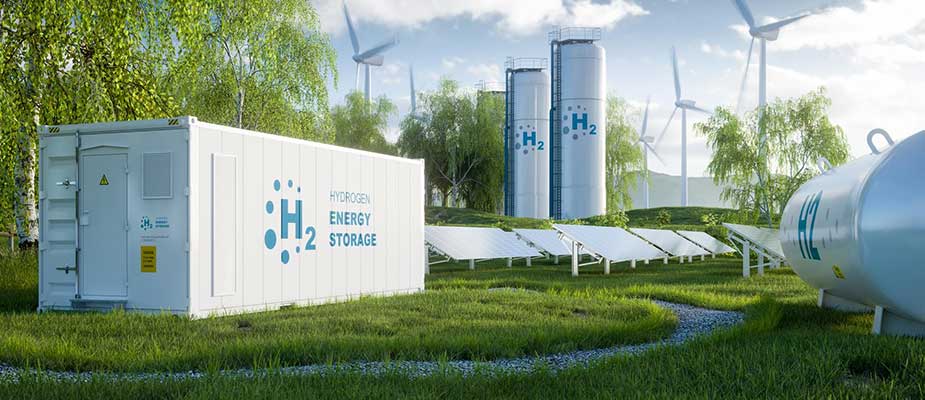
We are currently living through the most sweeping transition ever seen in the global energy supply. Countries throughout the world are moving away from burning carbon-based fuels and are choosing to utilise lower/or zero-carbon fuels. Hydrogen is one of the most significant emerging forms of energy. Hydrogen can be used as an energy source in various ways, including as a fuel, but also as a basic building block of new energy technologies that will support the next evolution of human industry.
India is quickly becoming a leader in hydrogen innovation because of the combination of its abundant renewable energy sources and its vibrant industrial base. India is creating a comprehensive hydrogen development infrastructure to support the use of hydrogen fuels in transportation, industry, and sustainability objectives. Examples of developments include advanced hydrogen gas storage systems, new hydrogen gas cylinder cascade technologies, and the establishment of green hydrogen refuelling stations throughout India.
In this comprehensive guide, we will explain hydrogen and the systems that create it, discuss India’s role in creating a hydrogen-powered world, and discuss how these developments will impact the future of our global economy.
Hydrogen is the most abundant element in our universe. When utilised as a fuel (especially in a fuel cell), it produces electricity with only steam as the byproduct. Therefore, Hydrogen can play a major role in decarbonising many of those applications that cannot be directly electrified; these applications include:
Unlike fossil fuels, hydrogen can be generated from renewable energy sources. When generated from electrolysis using renewable energy (i.e. wind or solar power), hydrogen becomes an energy carrier without carbon emissions – “green hydrogen”.
India’s rapidly growing renewable energy generation capacity provides the country with an ideal opportunity to use green hydrogen as a means to diversify its energy portfolio and provide security against future drastic energy increases.
Hydrogen storage is an essential part of hydrogen infrastructure; regardless of how hydrogen is produced, it must be safely and reliably stored before it can be used or transported.
Hydrogen storage remains technically challenging because of the properties of hydrogen:
Due to the unique properties of hydrogen, there will be a need for innovative storage technologies to ensure the utmost in safety and efficiency of any hydrogen storage system.
1. Compressed Hydrogen Storage: Hydrogen is compressed at high pressures (350 bar – 700 bar) into specially designed cylinders. Hydrogen compressed storage is used for mobility and industrial applications.
2. Liquid Hydrogen Storage: Hydrogen can be kept in a liquid state by cooling it down to -253 degrees Centigrade to increase the density of hydrogen (i.e., liquid storage)
3. Material-Based Hydrogen Storage Systems: Work is ongoing to use metal hydrides and chemical carriers to store hydrogen. While still under development, these technologies will help increase the overall safety of hydrogen storage and increase the density of hydrogen stored.
Invest in certified, high-efficiency systems that ensure safety, scalability, and compliance with global standards. Start building your hydrogen-ready facility today!
Hydrogen gas cylinder cascade systems are among the most popular compressed hydrogen storage options on the market.
A hydrogen gas cylinder cascade is a set of multiple compressed gas cylinders connected together using a manifold system and arranged so they can all be used as a single source of hydrogen (i.e., they are in either high-, medium- or low-pressure stages, depending on the circumstances).
The use of a hydrogen gas cylinder cascade provides a reliable and safe means of supplying hydrogen while maximising the efficiency of the stored hydrogen gases being supplied.
Hydrogen gas cylinder cascade systems are used for:
Using a system of staged pressure control (also known as a cascading hydrogen cylinder system) increases overall operational efficiency by reducing the amount of gas that is wasted.
The engineering features of hydrogen gas cylinder cascade systems are as follows:
In addition to those items listed above, safety should always be the primary concern when dealing with hydrogen gas due to its flammable range and high diffusivity of hydrogen gas. Thus, the engineering design and materials used in hydrogen gas cylinder systems must meet strict standards.
Ensure operational efficiency and enhanced safety with expert-designed systems tailored to your needs.
Production sites produce hydrogen that must then be transported to end users. This is where a green hydrogen filling plant in India becomes necessary.
A green hydrogen filling plant will:
Unlike traditional filling plants, green hydrogen filling plants are designed with an integrated emphasis on renewable energy sources, meaning the entire supply chain is carbon-neutral.
India continues to experience increased energy demand. Investment in the green hydrogen infrastructure will provide significant benefits for the country, including:
The Green Hydrogen Corridor and pilot hydrogen bus projects currently underway represent “real-world” applications of these benefits.
Set up a state-of-the-art green hydrogen filling plant in India with turnkey engineering solutions and compliance-ready infrastructure. Take the next step toward sustainable growth today!
Hydrogen adoption has been rapidly increasing, but adoption still has some hurdles, such as:
However, with continued policy support from the government, advancement of technology sharing and private sector engagement, hydrogen adoption can be accelerated through the successful implementation of solutions.
A successful hydrogen network must contain all of the components of the Hydrogen Ecosystem listed above:
Together, the above components form a functioning Hydrogen Ecosystem that is reliable, scalable and sustainable.
Hydrogen is not only a renewable alternative fuel source, but it has the potential to dramatically change how we power our energy systems on a national or global level for almost all energy-based industries and transportation systems.
The advancements of hydrogen gas storage, cascading storage systems of hydrogen gas cylinders and the rapid development of hydrogen filling stations in India are laying the foundation for a resilient low-carbon future in India.
Hydrogen and the Hydrogen Ecosystem represent a continuance of the growing momentum for environmentally sustainable renewable energy. The hydrogen infrastructure is rapidly expanding. The technologies are ready.
Whether you’re planning advanced hydrogen gas storage systems, installing a hydrogen gas cylinder cascade, or building a green hydrogen filling plant in India, now is the time to act.