
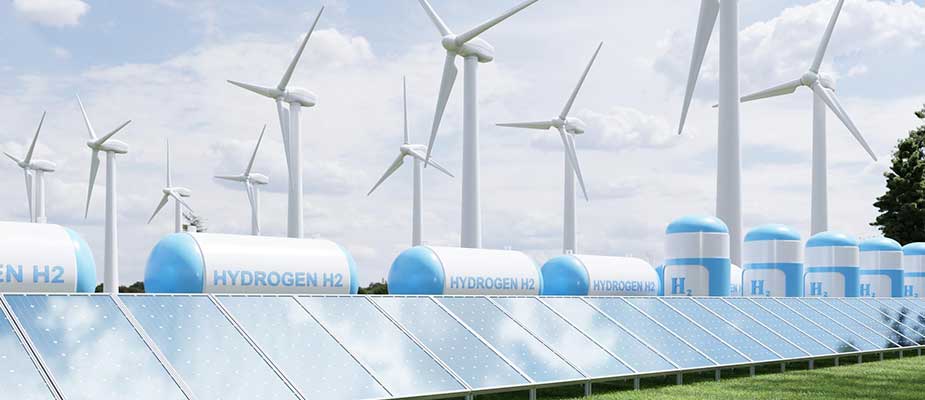
Green Hydrogen has now taken centre stage in the world’s largest theatre around India’s energy transition. With the National Green Hydrogen Mission now actively engaged since 2026, India is not only envisioning its carbon-neutral future but is also in the process of engineering pipes, tanks, and related infrastructure.
The sheer scale of ambition is enormous, to produce 5 million tonnes per year of green hydrogen by 2030; however, in order to effectively utilise such lightweight and high-energy fuel, a new form of container will be necessary. The combination of this lightweight and high-energy fuel and a previously devised container type requires the inventive utilisation of a hydrogen gas cylinder cascade to transport hydrogen from when it is produced to when it is converted to energy.
Let’s check out how the evolution of a simple storage tank occurred, the role of a gas cylinder manufacturer in India, and how strategically configuring a hydrogen gas cylinder cascade is the key to successfully implementing and utilising efficient industrial-scale hydrogen production capabilities.
Hydrogen has a lot of contradictions. It has nearly three times more energy per kg than gasoline; however, it has the lowest density of any material on Earth. Therefore, to be of use at a steel mill in Odisha or to a bus fleet in Leh, hydrogen must be compressed at very high pressure.
Hydrogen cannot be stored simply by placing it in a container (like a gas or liquid container). The size of hydrogen molecules allows them to leak through solid metal (known as hydrogen embrittlement). Because of the size, modern storage technologies must address:
Join the ranks of India’s decarbonised leaders with a custom hydrogen roadmap.
The hydrogen gas cylinder cascade uses a common manifold to connect individual cylinders. By connecting multiple short-term (1 to 4 days) cylinders in a bank, both the volume (storage capacity) and the amount of gas supplied to the vehicle can be optimised, compared with using single cylinders one at a time in a high-volume application such as a hydrogen refuelling station or chemical plant.
An example of the single cylinder vs cascade is as follows: A cascade is a bank of high-pressure cylinders (i.e., 10, 20, or even 120) with a common manifold. The key to the efficient operation of this system is the management of cylinder pressures. Most current systems have a three-stage priority logic; they may be considered to have staged pressure discharges.
By utilising this sequential discharge method, a hydrogen gas cylinder cascade can provide 45% greater energy efficiency and ensure that the maximum quantity of gas is extracted from the cylinders before refilling.
The global distribution network for high-pressure vessels used to be mostly controlled by companies based in North America and Europe; by 2026, it will no longer be so. A domestically based manufacturer of gas cylinders in India has now created a product line/brand of high-quality type III and IV composite cylinders that can compete with any other worldwide brand.
Every gas cylinder manufacturer in India wants Type IV tanks to be the “Holy Grail.” They have a few major differences when compared to traditional steel (Type I) tanks:
This development is going to avoid the high cost of importing gas cylinders into India and allow companies that are sourcing their gas cylinders from India to benefit from manufacturing designed for the environment of 50 degrees Celsius or higher.
Sourcing Type IV cascades directly from Indian soil reduces your Capex by up to 30%!
Hydrogen gas cascades are more than just a way to store hydrogen; they will serve as operational assets when they are deployed at numerous locations in 2026 in diverse, high-value applications.
India’s pilot projects in mobility have been established along ten major transportation routes. At these hydrogen refuelling locations, a hydrogen gas cascade stores the hydrogen produced from local electrolysers and delivers hydrogen to fuel cell-powered buses within minutes, thus creating the convenience of a standard petrol station.
In cities such as Surat, the blending of green hydrogen into Piped Natural Gas (PNG) networks is being performed at levels of up to 5%. The addition of a hydrogen gas cascade provides the PIB with a metered, steady flow of hydrogen as it mixes with the natural gas stream, ensuring the proper ratio of hydrogen to natural gas, while simultaneously preventing pressure drops in the industrial furnace.
For data centres and other remote locations, such as high-altitude areas like Leh, hydrogen fuel cells will provide silent, zero-emission alternatives to diesel generators due to cascading hydrogen gas storage. A hydrogen gas cascade can provide enough energy to operate a remote facility for days, thus providing ease of recharge by utilising excess solar power generated during the day.
When working with a combustible gaseous fuel that is almost invisible in the air, the main objective of engineering design is to ensure worker safety. All hydrogen cascade installations must meet the following stringent requirements:
Newer hydrogen cascades utilise “Digital Twins”, which are IoT devices that provide continuous monitoring of pressure, temperature and leak data for the entire subsystems (like PV’s) in order to prepare predictive maintenance before there is a loss of critical fastener integrity (e.g. nut holding PRD on).
Don’t leave your safety to chance.
Becoming carbon neutral is more than creating renewable energy – it involves having confidence in and control over the renewable energy you create. The hydrogen cylinder cascade is the hidden engine behind this transition, acting as the source of reliability and efficiency to meet the needs of heavy industrial production and transportation.
If you’re a refiner or an operator of a commercial fleet transitioning to fuel cell technology or a company creating a green microgrid, how you will store hydrogen will be your most important decision. Partnering with a superior-quality gas cylinder manufacturer in India and investing in a high-performance hydrogen gas cylinder cascade is not just purchasing equipment; it is positioning your business for a prominent place in the new energy economy.
Is your facility prepared to accommodate it?