
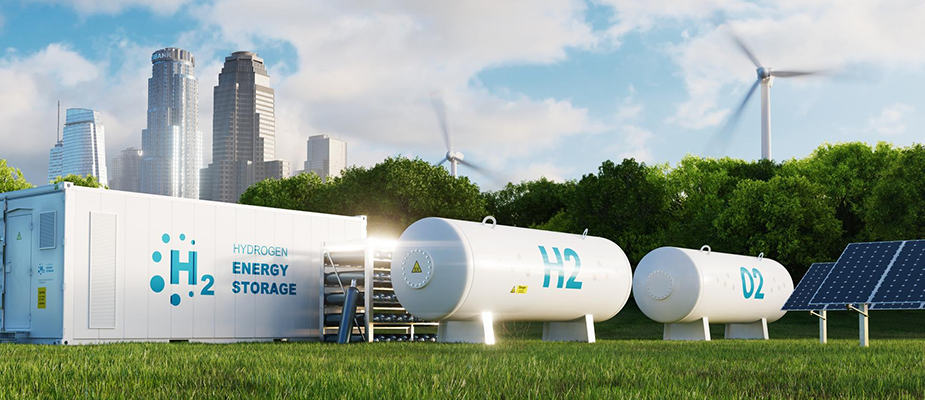
India’s energy revolution is on the verge of happening. As industries around the world switch to cleaner energy sources, hydrogen has been identified as one of the leading energy carriers for the 21st century. Hydrogen will not only help to eliminate greenhouse gases from heavy industry but will also provide fuel for advanced forms of mobility that are yet to be developed.
The foundation for India’s hydrogen economy is adequate and appropriate infrastructure, which includes hydrogen gas storage tanks, hydrogen gas cylinder cascades that transport hydrogen from production facilities to users, and state-of-the-art facilities (such as a hydrogen filling facility) that can produce and dispense hydrogen. Together, these three pieces of infrastructure create an entire ecosystem for a hydrogen economy.
This guide will present a broad overview of the many different elements that make up hydrogen systems, including the science behind how hydrogen works, how the infrastructure for hydrogen is built and operated, what hydrogen can be used for, and what is happening now and in the future regarding hydrogen use in India and throughout the world.
For all intents and purposes, Hydrogen only exists as an incredibly versatile way to store and deliver energy; it produces ZERO greenhouse gases (GHG) when consumed.
Countries around the world continue to include Hydrogen in their energy roadmaps, including:
India has enormous renewable energy capacity and will be uniquely positioned as a leading producer and user of green hydrogen.
The categorisation of hydrogen is created using different methods of production:
India’s vast resources of solar and wind energy provide the opportunity to produce green hydrogen economically.
Compressed hydrogen gas storage utilises compressed gaseous hydrogen cylinders. Cylinder pressure ranges from approximately 350 – 700 bar, and is used in most industrial applications and hydrogen-powered transportation.
Liquid hydrogen is produced by cooling hydrogen gas to -253 °C. Because of significantly lower volumes of liquid than gaseous hydrogen, liquid hydrogen has very high densities and is typically used for aerospace applications or large-scale industrial hydrogen storage.
Metals, particularly metal alloys, and other chemical carriers, are used to absorb or store hydrogen gas for applications requiring compact and safer alternatives for hydrogen gas storage. Research in this area is promising.
Partner with industry experts who ensure safety, compliance, and scalability. Future-proof your operations today!
The hydrogen gas cylinder cascade system is an important compressed gas storage system for fueling and industrial applications.
A hydrogen gas cylinder cascade is a collection of multiple high-pressure hydrogen gas cylinders that are connected to one another through a manifold system. The purpose of the manifold system is to allow the hydrogen gas to be stored and supplied at controlled, regulated pressures.
Hydrogen fueling stations rely heavily on cascade systems to provide vehicles with hydrogen through the staged pressure levels during the refuelling process, as an example of a use for a hydrogen gas cylinder cascade.
To ensure safety, hydrogen systems must meet multiple regulations because hydrogen is both flammable and highly diffusive.
To minimise risk while maximising performance, modern engineering in cascade systems requires extreme precision in their development.
Invest in certified hydrogen gas cylinder cascade systems designed for performance and safety. Connect with specialists today!
Hydrogen filling plants in India are mandatory for producing hydrogen through electrolysis or steam methane reforming, for compressing, storing, and dispensing that hydrogen to the end user.
A hydrogen filling facility compresses, stores, and dispenses hydrogen into cylinders, tank trucks, and hydrogen fuel cell vehicles.
Hydrogen can only be distributed and used efficiently if it is produced at scale and is supported by filling facilities.
India’s increasing hydrogen-based initiatives are driven by the desire to reduce carbon emissions and to create energy independence; ongoing investments include:
Numerous private and public enterprises are investing in hydrogen filling plants in India within key industrial areas as well as regional transportation hubs.
Collaborate with experienced engineers and turnkey solution providers to build compliant, high-efficiency facilities.
Fuel cell electric vehicles (FCEVs) are a leading application for hydrogen.
In a hydrogen fuel cell, hydrogen from an onboard storage tank reacts with oxygen, producing electricity and only water vapour as an emission.
Benefits of Hydrogen fuel cell vehicles compared to battery electric vehicles include:
India has begun the trial of hydrogen fuel cell buses and is looking into hydrogen fuel cell corridors for freight transport.
Hydrogen is being produced and consumed in many industries in India, such as:
By switching to using green hydrogen, these industries can reduce their carbon emissions.
Hydrogen infrastructure investment, such as hydrogen gas storage systems and hydrogen gas cylinder cascade systems, will have positive economic impacts, such as:
India has the potential to be a leader in the worldwide production of green hydrogen and other products.
Reduce emissions, improve efficiency, and gain a competitive advantage with modern hydrogen gas storage and distribution systems.
Several engineering considerations should be evaluated when establishing a hydrogen filling station:
Hydrogen is a major contributor to our climate change goals if produced sustainably.
The advantages of producing hydrogen sustainably include:
Hydrogen also supports India’s objective to expand its use of renewable energy sources.
Future hydrogen storage innovations will result from developing:
These innovations will provide higher-density storage for hydrogen, increased safety, and reduced costs.
Some of these future innovations may improve the existing storage methodologies; however, they could also present challenges associated with developing the necessary infrastructure, such as:
Despite these challenges, R&D (research and development), along with the support of government initiatives, will continue to produce solutions that will accelerate the hydrogen economy.
Explore advanced hydrogen gas storage and cascade systems tailored for industrial and mobility needs. Contact experts to design your hydrogen ecosystem.
Hydrogen represents not only an alternative energy source, but it is also an important part of the overall strategy for creating renewable energy around the world. Hydrogen potentially plays an exceedingly critical role in all aspects of decarbonizing industry as well as developing green mobility.
A robust hydrogen infrastructure consists of:
These individual parts allow for safe and secure adoption of hydrogen as a scalable and sustainable energy product.
The energy transition is taking place at an increasingly fast speed. Will you be ready to lead this energy transition?